
Dive Brief:
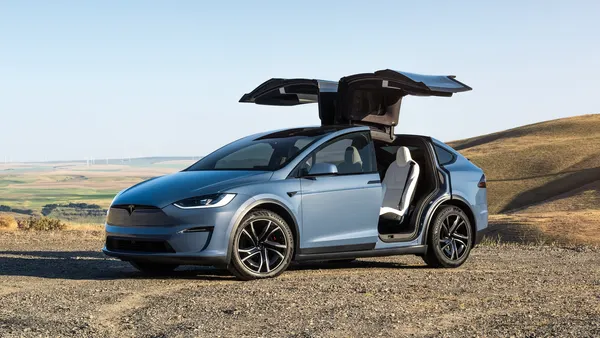
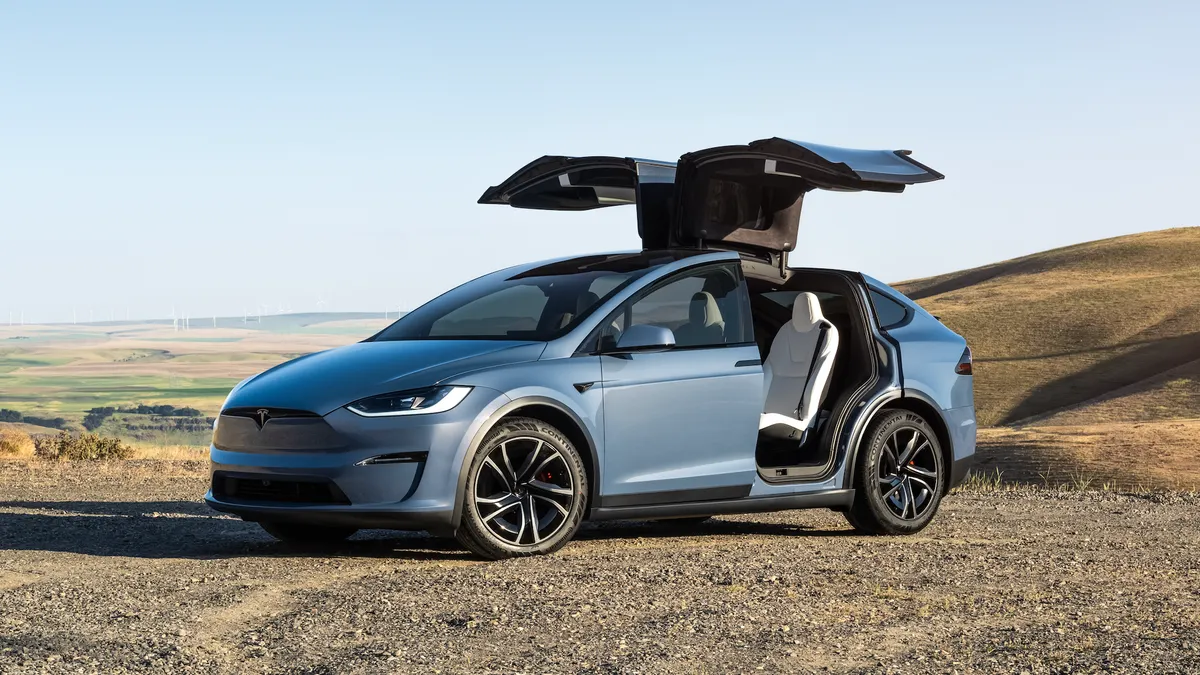
- Tesla will end production of the Model S sedan and Model X SUV in the second quarter of this year, CEO Elon Musk said on the company’s earnings call on Wednesday.
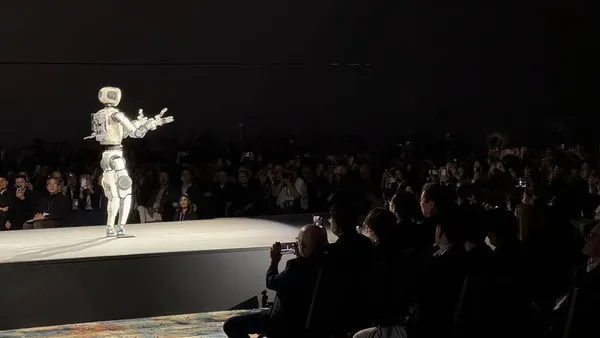
- Tesla’s California factory, where the two electric models have been built since 2012 and 2015, respectively, will be retooled for mass production of the company’s humanoid Optimus robots, with the long-term goal of producing 1 million units a year.
- “It's time to bring the Model S and X programs to an end with an honorable discharge,” Musk said. “If you are interested in buying a Model S and X, now would be the time to order it because we expect to wind down S and X production next quarter."
Dive Insight:
The two aging models accounted for around 3% of Tesla’s global production of 1.65 million vehicles in 2025. The company does not break down individual sales of the Model S or Model X, but annual production totals, including the low-volume Cybertruck, were roughly 54,000 units last year, according to Tesla’s year-end sales summary.
The first customer deliveries of the Model S began in June 2012, followed by the Model X in September 2015. Tesla will continue to support current Model S and Model X owners with any servicing needs.
"We'll obviously continue to support the Model S and X programs for as long as people have the vehicles,” Musk said.
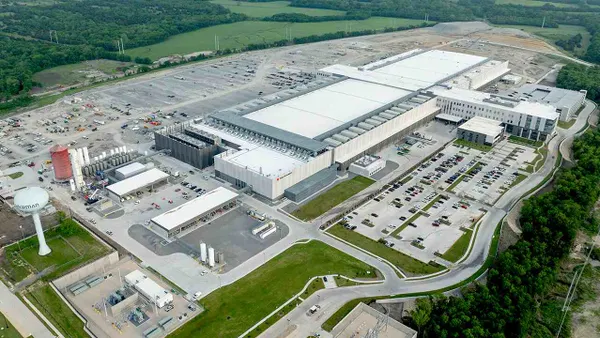
As production of the Model S and Model X comes to an end at Tesla’s Fremont, California, factory, the company is looking towards a future that includes autonomous driving, robotaxis, humanoid Optimus robots, AI compute clusters, solar energy and stationary energy storage systems, which are in high demand for AI data centers.
"We are going to take the Model S and X production space in our Fremont factory and convert that into an Optimus factory with a long-term goal of having a million units a year of Optimus robots in the current S and X space,” Musk said.
Meanwhile, Tesla’s energy storage business generated a record gross revenue of $12.8 billion in 2025, a 26.6% year over year increase, Tesla CFO Vaibhav Taneja said on the call with analysts. Due to the rapid growth of its energy storage segment and its future product roadmap, Tesla plans to invest billions of dollars in 2026.
"This is going to be a very big CapEx year,” Musk said. “That is deliberate because we are making big investments for an epic future.”
The company’s capital expenditure is forecast to exceed $20 billion this year, which includes funding for what Musk calls a "TerraFab" chip facility to produce chips domestically that integrate logic, memory and packaging. He said this will lessen its reliance on overseas suppliers and shield the company from geopolitical risks. Other spending will be for scaling production of its Optimus robots.
Tesla also plans to scale up production of its Cybercab robotaxi, which is slated to enter production in April. Musk predicts that Cybercab production volume will eventually exceed that of all other Tesla vehicles combined. “It's part of our overall shift to an autonomous future,” Musk said.
The Cybercab will be built as a fully autonomous vehicle, according to Musk, without a steering wheel or pedals. “There's no fallback mechanism here,” Musk said. “It's like this car either drives itself or it does not drive.”
Musk cited data that showed 90% of vehicle miles traveled are with only one or two passengers. He said the two-seater Cybercab is the most efficient form factor for cost-per-mile economics and expects to eventually have its fully autonomous vehicles operating in thousands of cities.
Musk also said the Cybertruck's role is shifting towards autonomous commercial applications without drivers, including localized cargo delivery and last-mile logistics.
Musk’s bold plans and future vision for Tesla, if achieved, will shift the company further from its core automotive business and transform it into an AI company, but that’s been Musk’s long-term plan for Tesla, as he said, “the future is autonomous.”
“There's still obviously many who doubt our ambitions for creating amazing abundance, but we're confident it can be done and that we're making the right moves technologically to ensure that it does,” Musk said.