Dive Brief:
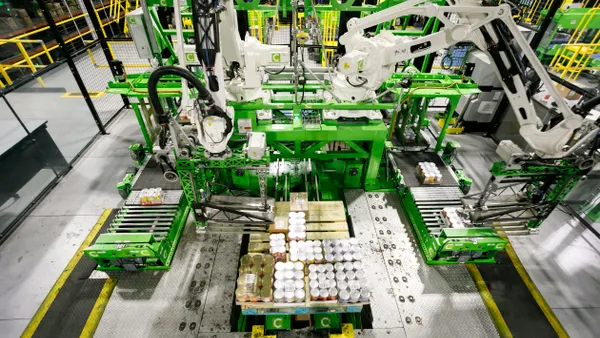
- As manufacturers increasingly implement artificial intelligence and automation across their operations, the biggest challenge is not the technology itself, but rather preparing the factories and warehouses for the transition, an expert said.
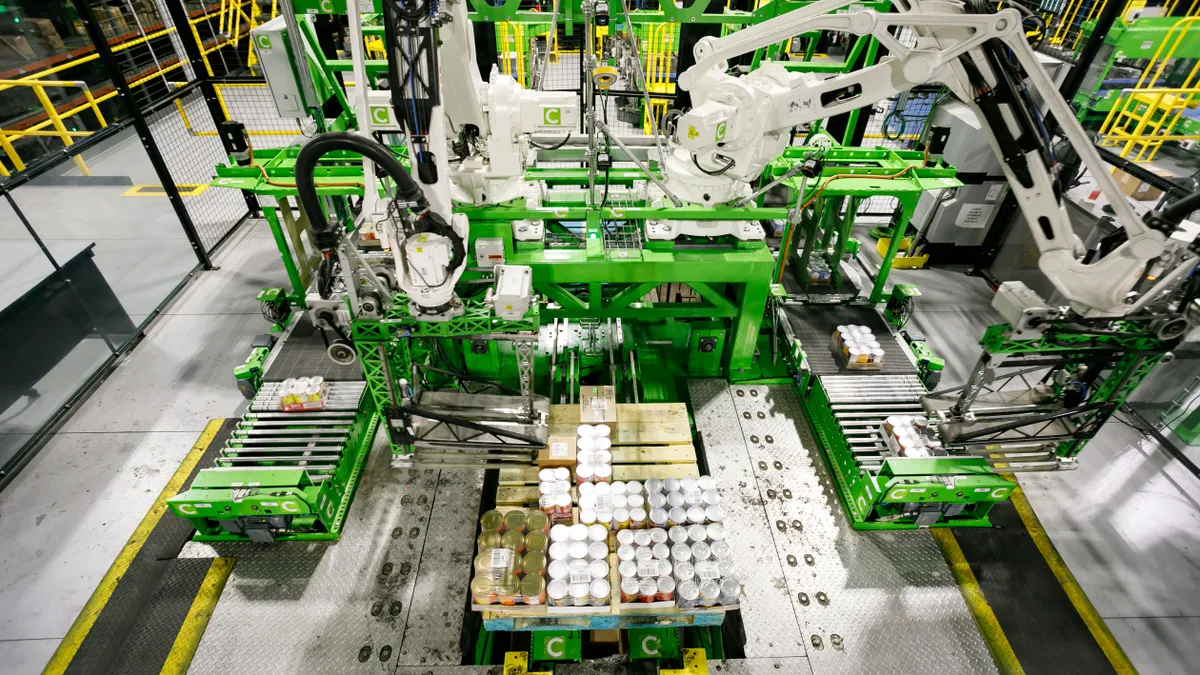
- “Most facilities weren’t built for the level of automation AI now supports,” Asad Afzal, global director of transformation at A-Safe, a U.K.-based supplier of safety barriers for industrial environments, said in an email.
- Companies like Dassault Systèmes and Samsung are partnering with Nvidia to transform their production systems and prepare them for next-generation manufacturing. Many, however, are struggling to keep up due to poor data quality, skills gaps or fragmented systems.
Dive Insight:
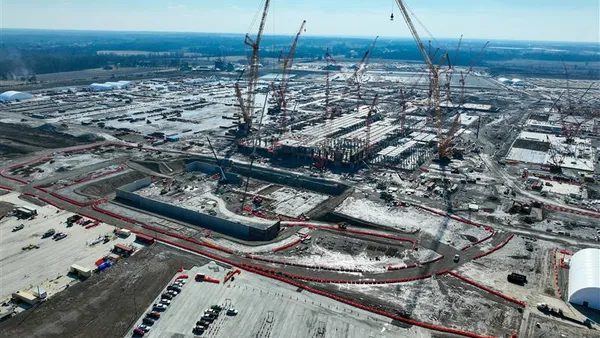
More connected systems are forcing manufacturers to reckon with their production layouts to stay competitive. Afzal, who has spent 10 years working on warehouses and facilities, said he sees increased congestion and repeat impact areas, with infrastructure “taking more hits than it was designed for” due to increased automation.
“If the physical environment does not evolve at the same pace, pressure will rise quickly,” Afzal said. “AI can improve workflows, but it cannot fix a layout that has existing friction.”
Automation is expected to more than double across manufacturing by 2030, according to a survey of hundreds of executives conducted by PwC. The competitive edge, however, will go to the companies that can effectively integrate AI into their systems and have their workforces buy in to the transformation, said Ryan Hawk, a global and U.S. industrials and services leader at PwC and author of the recently published report.
“As automation becomes ubiquitous, the advantage shifts from who has tools to who can orchestrate them across the enterprise,” Hawk said in an email.
When automation increases, there is also less tolerance for disruption. Throughput rises, traffic patterns change and the value of the equipment in the building increases, Afzal said.
“The real risk sits in that gap between digital capability and physical readiness,” he said.