

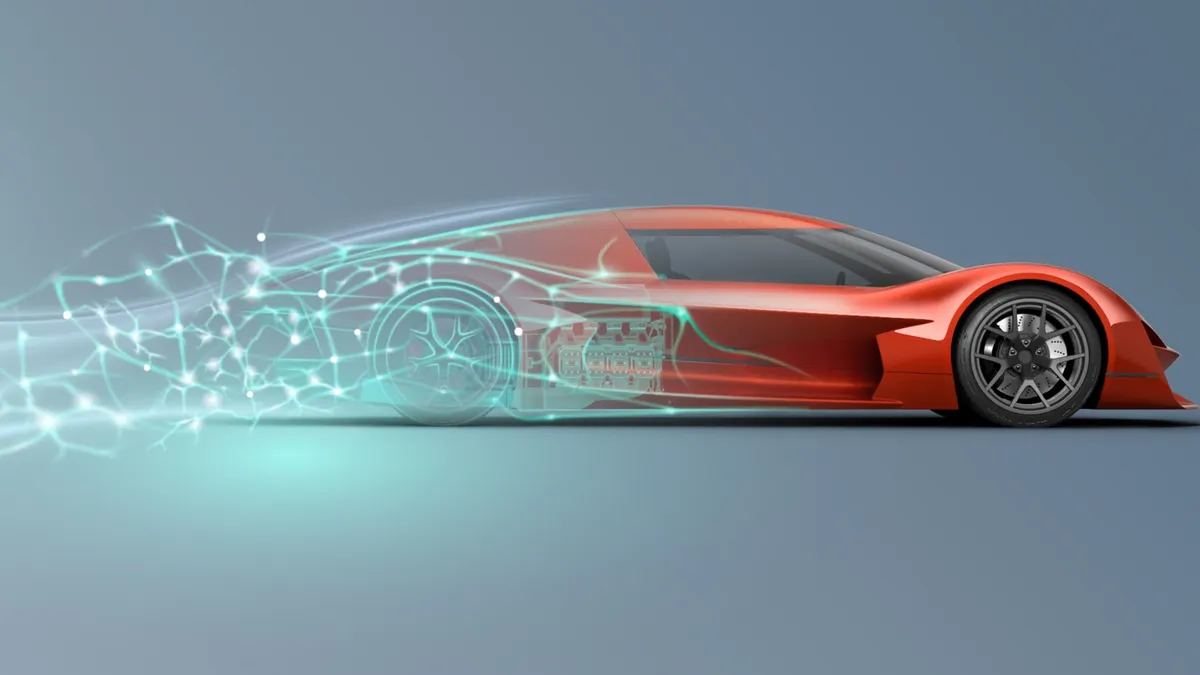

Artificial intelligence-powered vehicle design is revolutionizing the automotive industry, helping legacy brand designers match the speed of China-based carmakers in bringing vehicles to market.
That’s the claim being made by Switzerland-based Neural Concept for its AI engineering co-pilot platform that also suggests it can achieve up 30% shorter design cycles and $20 million in savings on 100,000-unit vehicle programs.
At the company’s presentation to CES Las Vegas 2025, it claimed its platform can also cut end-to-end product development times by up to 75%. It also claims to accelerate simulations by up to 10-times and boost auto characteristics, such as efficiency, safety, acoustics and aerodynamics, by up to 30%.
WardsAuto caught up with the company’s co-founder and CEO, Pierre Baqué, to find out more about the technology.
In an interview, Baque told us that the platform can be used in a multitude of ways to save costs, speed up time to market or to focus on bringing the latest technological innovations into exclusive products.
General Motors, Stellantis, Aston Martin and Subaru are among the company’s many clients, in addition to suppliers Mahle and Bosch. In September, Neural Concept announced announced a significant expansion of auto customers and adoption of its platform including Renault, Leonardo and SPAL Automotive.
Its NC Platform operates by placing a AI layer of design on the existing digital computer-aided engineering (CAD) systems, said Baqué.
“This is helping them [design engineers] design the car, render the assimilations and helping them make decisions on top of the digital layer,” he explained.
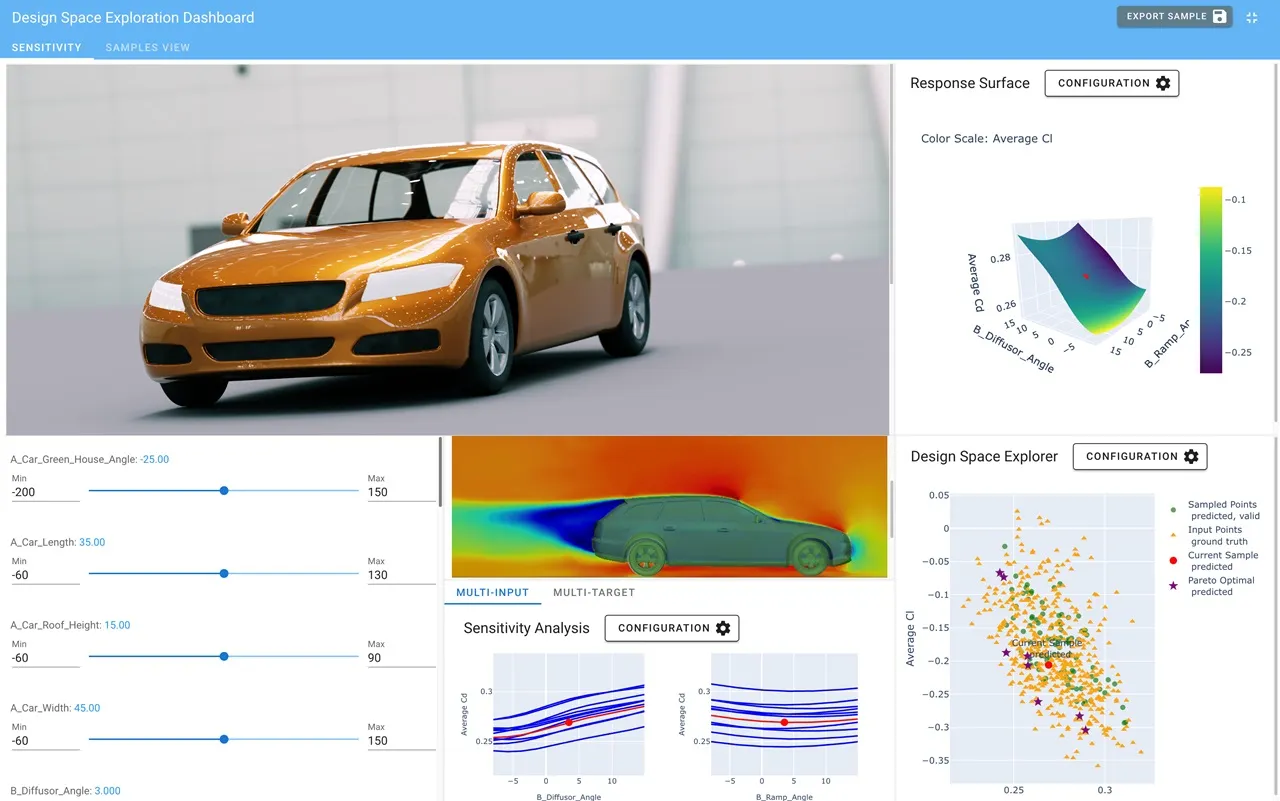
Today the automotive industry is being challenged to accelerate the vehicle production development timeline and the NC Platform achieves this by cutting back on repetitive design processes, he said.
For some clients this is a key attraction of the company’s platform. “Some companies are really obsessed with time to market with the idea of competing with China with the ability to put a car on the road in less than two years,” he said.
However, others see efficiency as a priority — being “able to do more with the same amount of people,” Baqué said. “We do this by providing help at every stage of the development process, and particularly at the early stages of the development process.”
On the other hand, some of Neural Concept’s premium brand companies target innovation above cost savings “bringing better products to market with the same type of engineering involved to continue to be on top of their game in terms of the performance of their products,” said Baqué.
Looking to the future, Baqué believes the NC Platform will be able to reimagine the traditional design concepts of the vehicle to respond to the emergence of electrification and autonomous driving.
“I think the companies equipped with our solution will be the ones that will be able to redirect much more quickly through the concepts and, therefore, converge on concepts that make most sense to the consumers as these concepts evolve in the coming years,” he said.
With the prospect of autonomous driving, for example, he suggested that a potential need to make the interior much bigger than the traditional vehicle could spark a whole litany of issues with the rest of the vehicle.
“The companies that can very quickly test engineering concepts, such as ‘If I make the cockpit three times bigger, how will that affect things in terms of aerodynamics?’”